
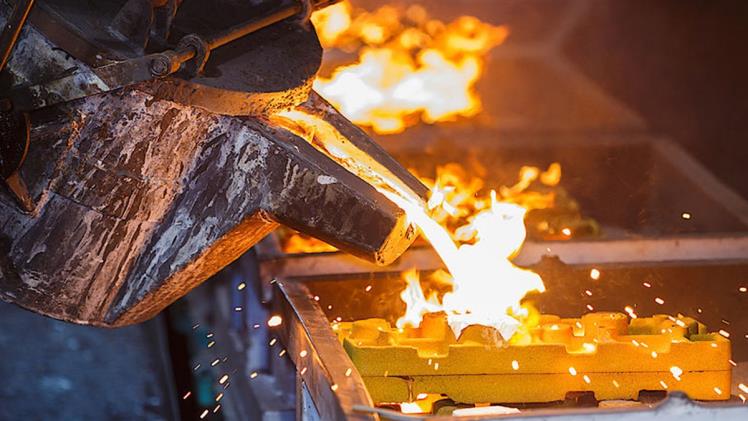
Metal filtration and casting are two foundry production processes that coexist and have been like that for years now. Just like the good old days when casting was used to create metallic items, not much has changed about the processes.
Sand and investment casting are two common types of casting used in industrial settings, with investment casting (also known as lost-wax casting) being reserved for the production of smaller, intricate parts.
In this article, we are going to look at the trends that are shaping investment casting and metal filtration. Read on to learn:
1. Honeycomb Ceramic Filters
Filtration has been proven to reduce various defects such as pouring metal and metallurgical defects during casting. While there are a couple of filters that can be used for this purpose, ceramic honeycomb filters have become a rising trend due to their effectiveness and efficiency.
By using Holy Filters’ ceramic filters for molten metal filtration, you can reduce the occurrence of issues such as quality inferiorities or contamination of the cast metal by the filters. Also, unlike foam ceramic filters, honeycomb ceramic filters are praised for larger and more stable metal flow.
2. Digital Design and Simulation
In lost foam casting, manufacturers are integrating digital design tools and simulation software to enhance the layouts and optimization of castings. Since lost foam casting offers increased design freedom, manufacturers can now use advanced 3D modeling and CAD software to create more intricate and complex components.
And when it comes to testing and optimizing casting processes, we no longer have to rely on destructive testing processes, thanks to simulation tools. With such tools, manufacturers can identify potential defects and tweak parameters to achieve the best results.
3. Additive Manufacturing
Additive manufacturing, including 3D printing, is another growing trend in the investment casting process. 3D printing allows manufacturers to implement rapid and cost-effective production processes for intricate and highly customized wax patterns with multi-dimensional accuracy.
With this type of manufacturing, you can enjoy better design flexibility, quicker pattern iterations, and reduced lead times. Therefore, the companies that manufacture casts can enjoy quicker time-to-market.
4. Automation and Robotics
Times have changed a lot with automation taking center stage even in production processes. Manufacturers can take advantage of technologies like machine learning and artificial intelligence to streamline most of the stages of investment casting, including filtration.
The robotic systems, in this case, would be beneficial for jobs like pattern assembly, shell building, and even finishing. Unlike manual systems, automated ones boast higher precision, productivity, and consistency scores.
5. Advanced Quality Assurance
QA is a crucial part of investment casting, not only because it helps in certifying that the expected quality is met, but also because it makes it easier to determine where improvements are needed. With non-destructive testing (NDT) methods like ultrasound, thermal imaging, and X-ray, manufacturers can improve the integrity of their castings while being eco-friendly.
What’s more, sustainable in-line inspection systems are being developed and implemented to track quality performance on the go, further enhancing results.
6. Digital Twin Technology
Investment casting is supposed to be as precise as possible, especially considering it’s used for the more intricate and tinier components. That was one of the triggers for the concept of a digital twin. A digital twin is simply a virtual replica of the main, physical investment casting process.
Having a digital twin process provides for real-time monitoring, accurate analysis, and advanced optimization of the casting process. This paves the way for improved quality, productivity, and predictive maintenance.
There, You Have It!
These are just some of the top advancements in investment casting that are transforming the manufacturing landscape and improving precision, complexity, and quality in production. The majority of these trends are also focused on sustainability and environmental friendliness while meeting the evolving demands of different sectors and clients.